Scattered and Drawn:
Conversations in the Art of Attention
An Online Exhibition of New Pottery Work by Becca Ito
With Co-Ideation and Writing by Leah McMichael
July 2020
Virtual Artist Talk on Saturday, August 1, 2020 | 8 PM EST
Video Meeting ID: meet.google.com/hyd-uguw-ihn
Phone Numbers: (US)+1 413-752-1107 | PIN: 404 914 848#
Artist Statement
Attention can be elusive. Easy to lose and hard to corral, it’s notorious for wandering. But the scattered seed lands somewhere, and sometimes attention settles on the unforeseen. An Indiana sunset or the pathos of King Lear; the glory of pastry dough or the surprise of a friendship well-known and still unfolding. We talk about paying attention, but the reward is so far beyond the offering it seems truer to call it gift.
As a daytime Latin teacher, I can inform you that the words “to tend,” “attention,” and “attend” all derive from the same Latin root, tendere: to stretch, spread, extend. Picture a vine reaching sunward, or a person leaning in to catch the words of a soft-spoken friend. The gift is there, if you’re open.
Left to myself, though, I confess I find that openness tricky. That’s why this show is a conversation. The concepts were hammered out over phone calls and meals with friends, and my college roommate Leah mapped the whole thing out with me on a road trip to Wisconsin. The ideas live between us. She’s done the writing for this show, and I’ve made the pottery. Mostly. (The words were in fact born of long conversations on both sides, and she did the carving for Tea at 21st St.)
Together, then, we invite you to attend to aspects of the ordinary: to language, to motion, to place, to one another. May they catch your eye and draw your thought, opening doors unforeseen in the intricate and bewildering world in which we live.
Attention to Language
As a Latin teacher (and friend to a writer), I spend a lot of time thinking about words. We use them to describe and understand our experiences. But they also shape what we’re able to perceive. When “happiness” has to stand in for conviviality, mirth, merriment, contentment and bliss, we are impoverished. The world we’re capable of experiencing has shrunk. These pieces are my attempt to rehabilitate five half-forgotten words. Some, like conversation and companion, relate directly to hospitality. The others—felicity, quicken, and dominion—come to the table by more meandering paths, but I believe they all get there in the end. I invite you to look, to read and to consider: what words do you want at your table?
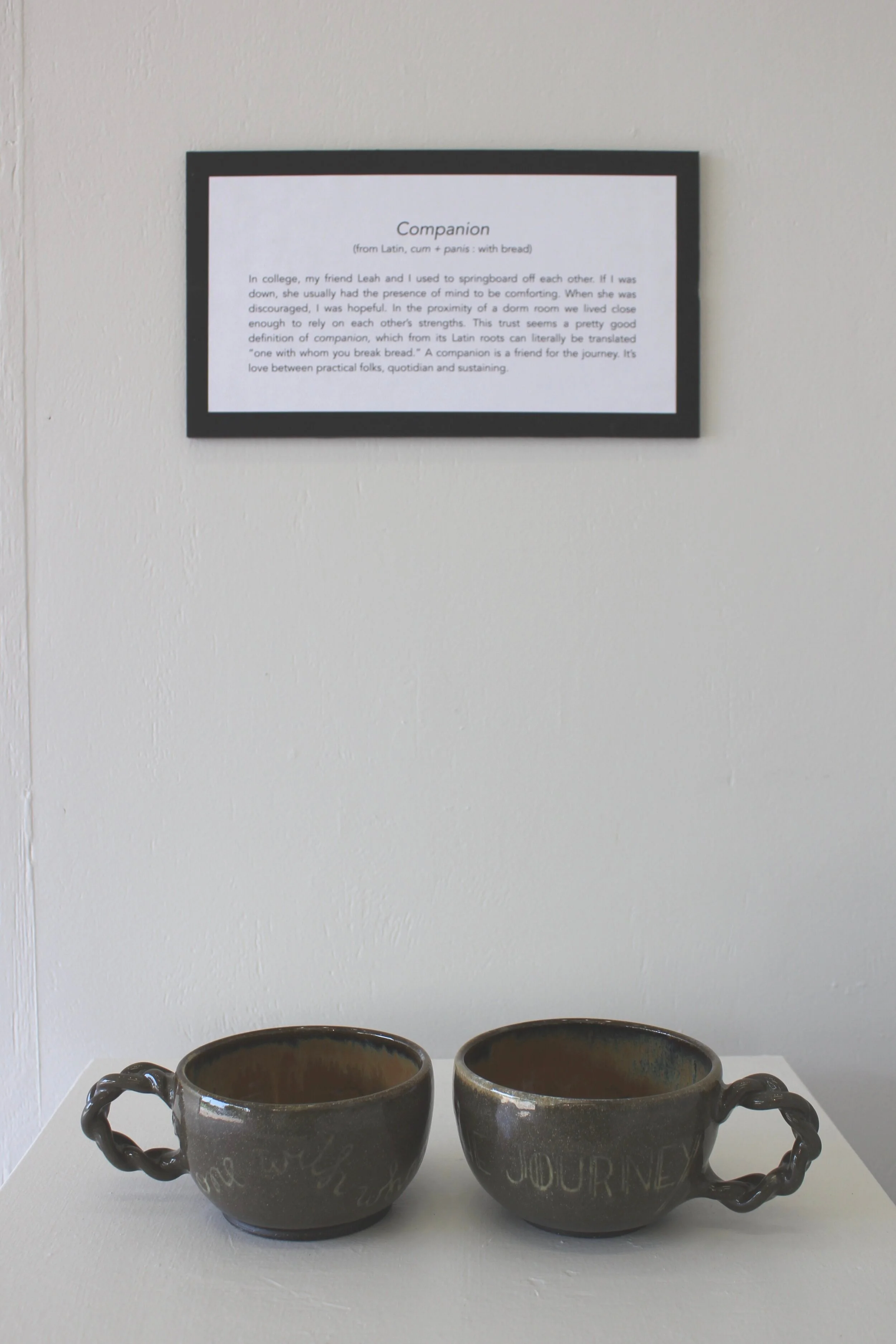
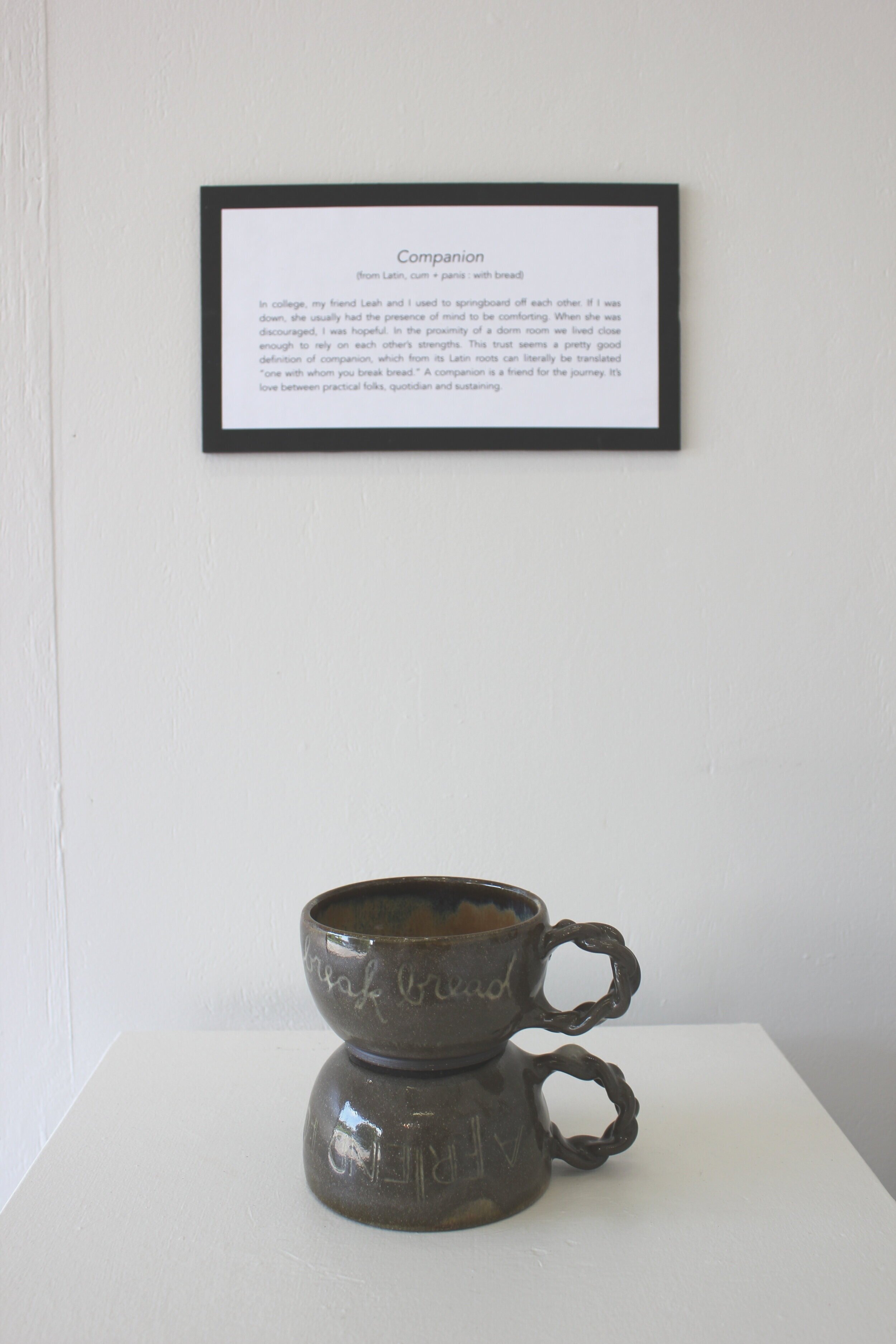
Companion
(from Latin, cum + panis : with bread)
In college, my friend Leah and I used to springboard off each other. If I was down, she usually had the presence of mind to be comforting. When she was discouraged, I was hopeful. In the proximity of a dorm room we lived close enough to rely on each other’s strengths. This trust seems a pretty good definition of companion, which from its Latin roots can literally be translated “one with whom you break bread.” A companion is a friend for the journey. It’s love between practical folks, quotidian and sustaining.
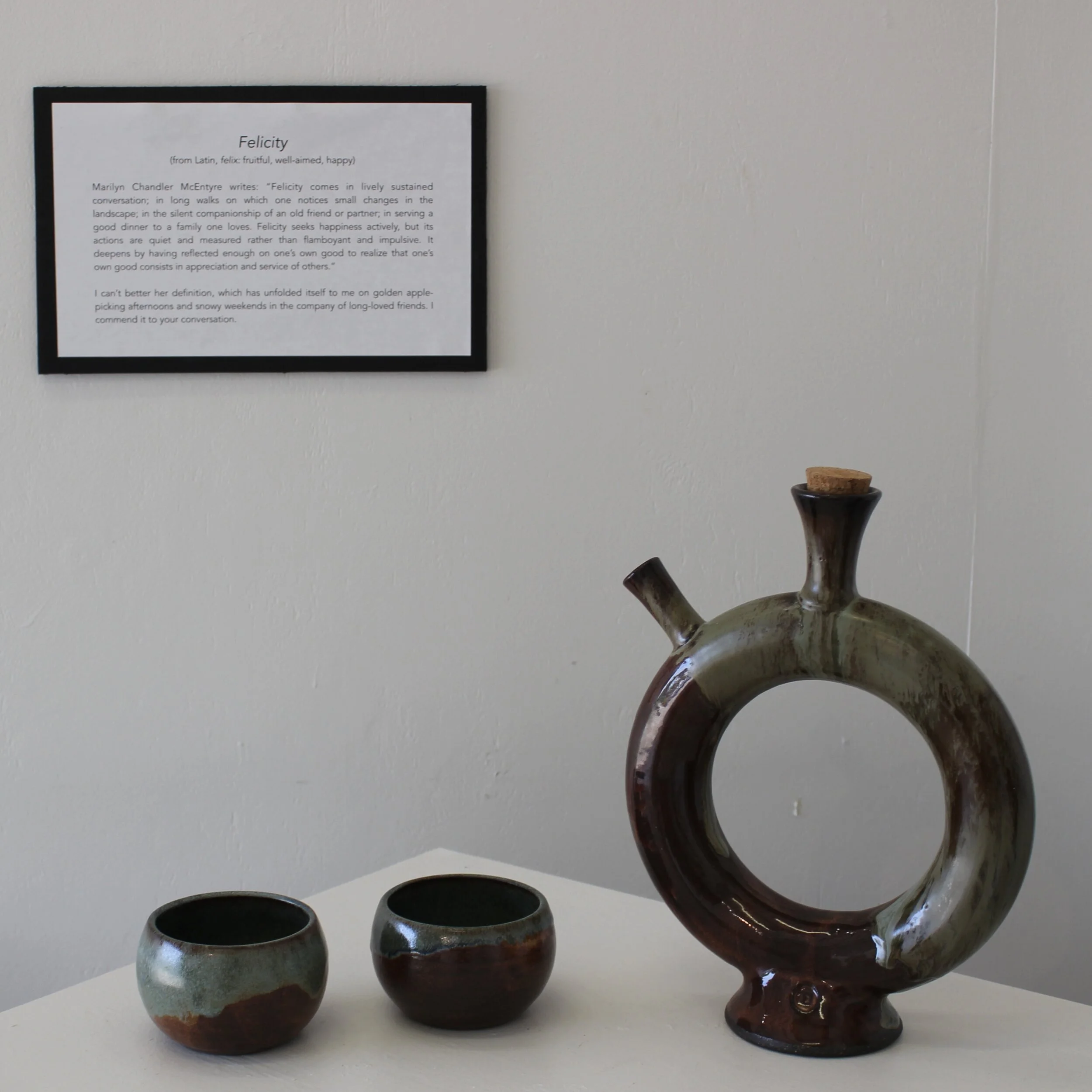
Felicity
(from Latin, felix: fruitful, well-aimed, happy)
Marilyn Chandler McEntyre writes: “Felicity comes in lively sustained conversation; in long walks on which one notices small changes in the landscape; in the silent companionship of an old friend or partner; in serving a good dinner to a family one loves. Felicity seeks happiness actively, but its actions are quiet and measured rather than flamboyant and impulsive. It deepens by having reflected enough on one’s own good to realize that one’s own good consists in appreciation and service of others.”
I can’t better her definition, which has unfolded itself to me on golden apple-picking afternoons and snowy weekends in the company of long-loved friends. I commend it to your conversation.
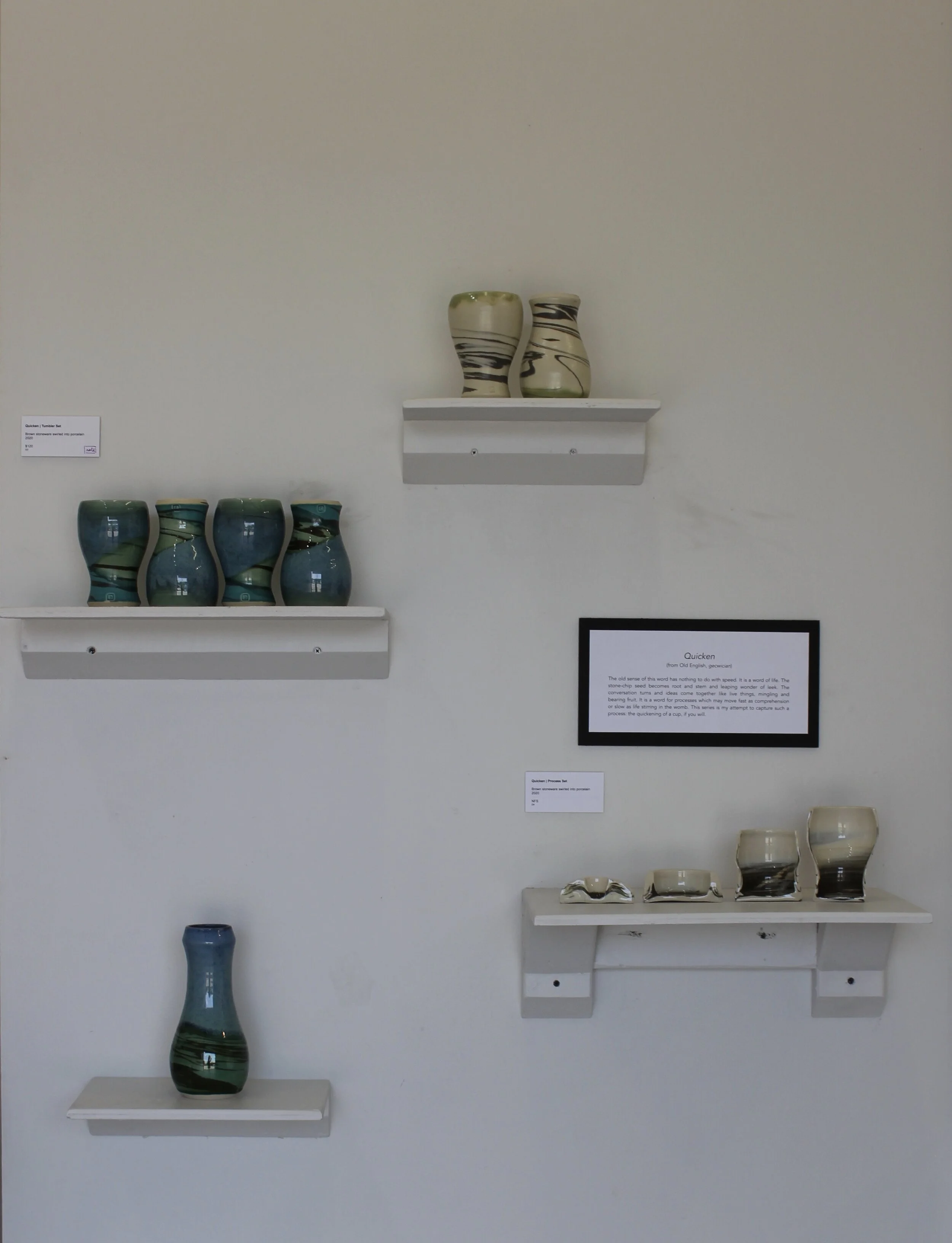
Quicken
(from Old English, gecwician)
The old sense of this word has nothing to do with speed. It is a word of life. The stone-chip seed becomes root and stem and leaping wonder of leek. The conversation turns and ideas come together like live things, mingling and bearing fruit. It is a word for processes which may move fast as comprehension or slow as life stirring in the womb. This series is my attempt to capture such a process: the quickening of a cup, if you will.
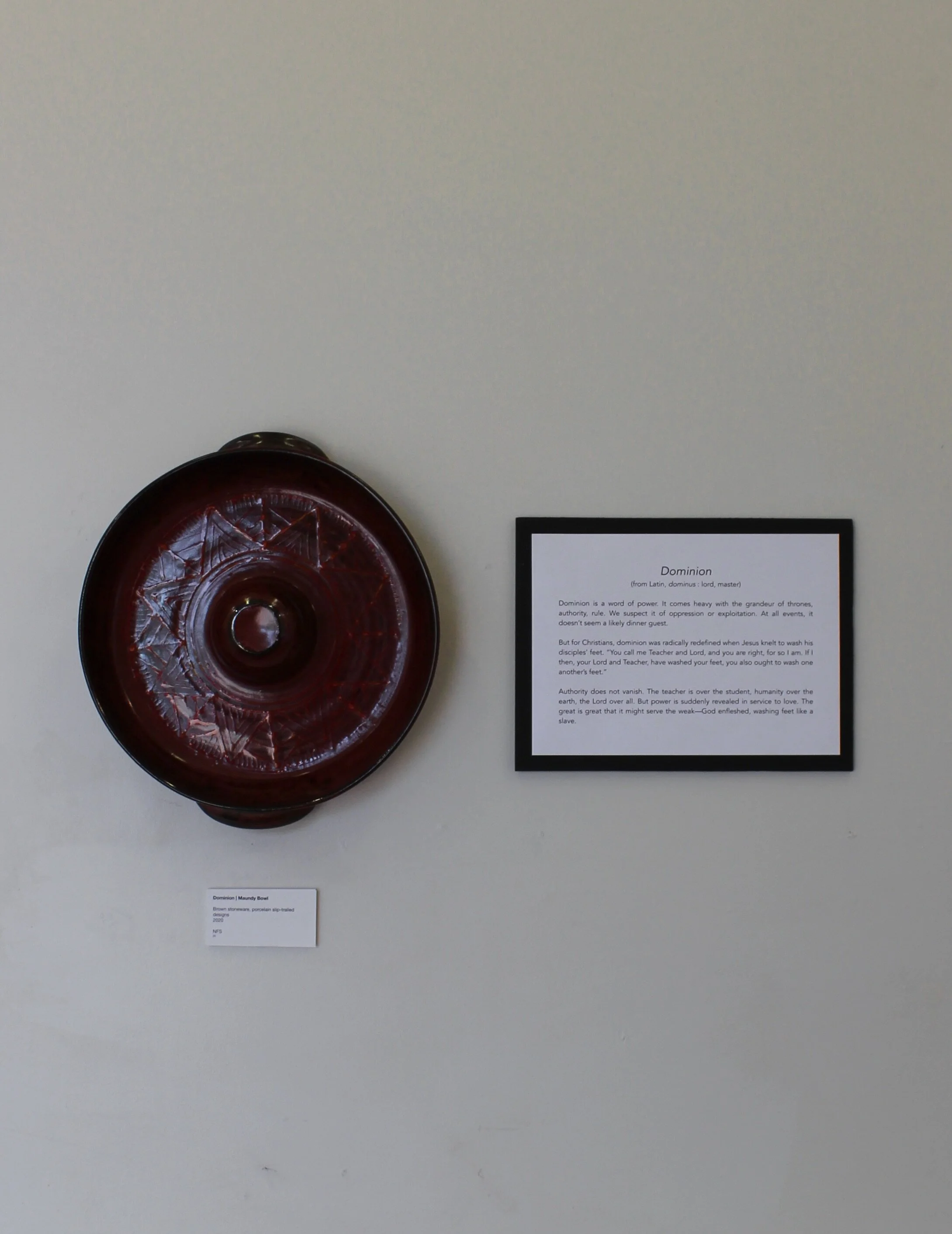
Dominion
(from Latin, dominus : lord, master)
Dominion—from the Latin dominus, master or lord, is a word of power. It comes heavy with the grandeur of thrones, authority, rule. We suspect it of oppression or exploitation. At all events, it doesn’t seem a likely dinner guest.
But for Christians, dominion was radically redefined when Jesus knelt to wash his disciples’ feet. “You call me Teacher and Lord, and you are right, for so I am. If I then, your Lord and Teacher, have washed your feet, you also ought to wash one another’s feet.”
Authority does not vanish. The teacher is over the student, humanity over the earth, the Lord over all. But power is suddenly revealed in service to love. The great is great that it might serve the weak—God enfleshed, washing feet like a slave.
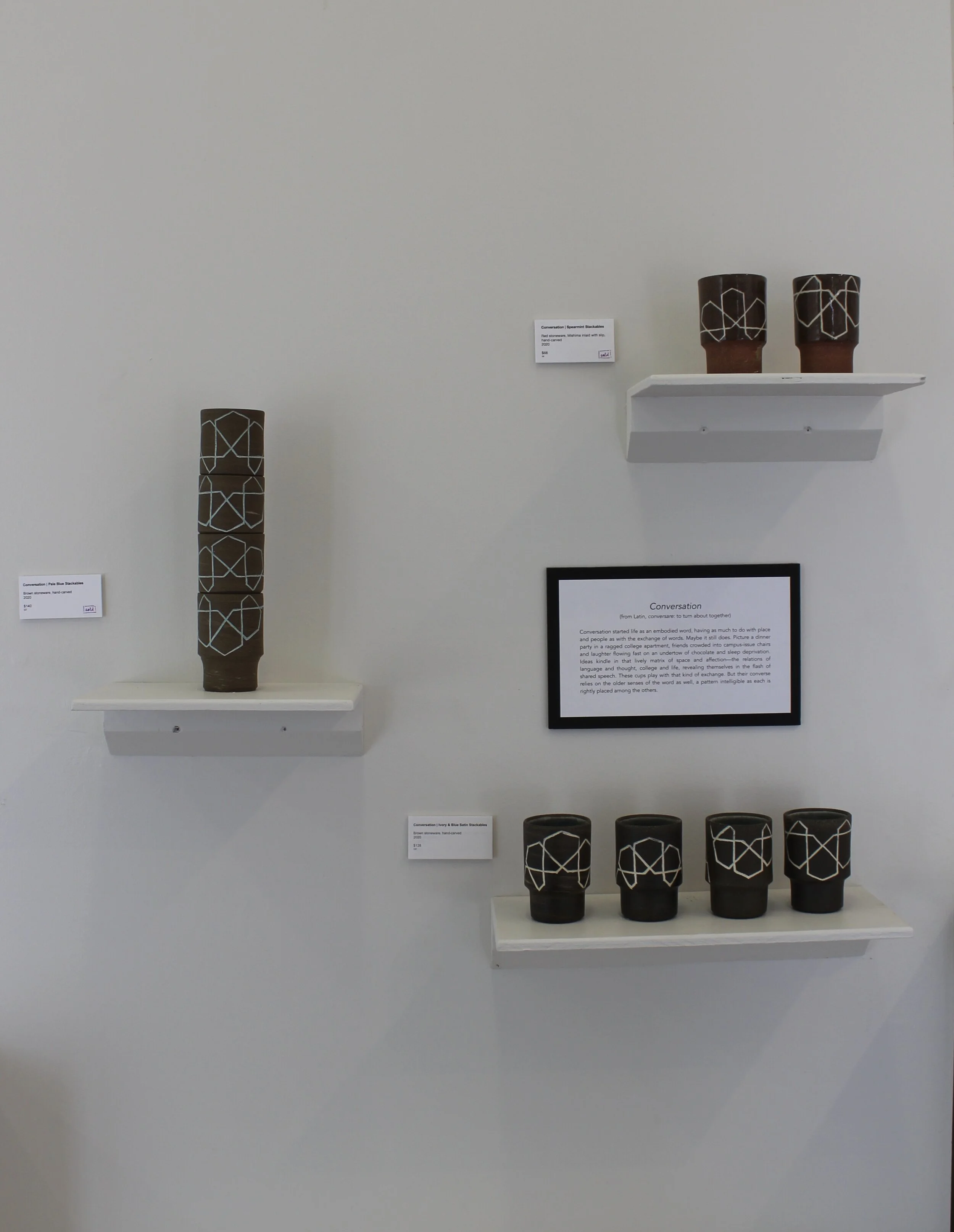
Conversation
(from Latin, conversare: to turn about together)
Conversation started life as an embodied word, having as much to do with place and people as with the exchange of words. Maybe it still does. Picture a dinner party in a ragged college apartment, friends crowded into campus-issue chairs and laughter flowing fast on an undertow of chocolate and sleep deprivation. Ideas kindle in that lively matrix of space and affection—the relations of language and thought, college and life, revealing themselves in the flash of shared speech. These cups play with that kind of exchange. But their converse relies on the older senses of the word as well, a pattern intelligible as each is rightly placed among the others.
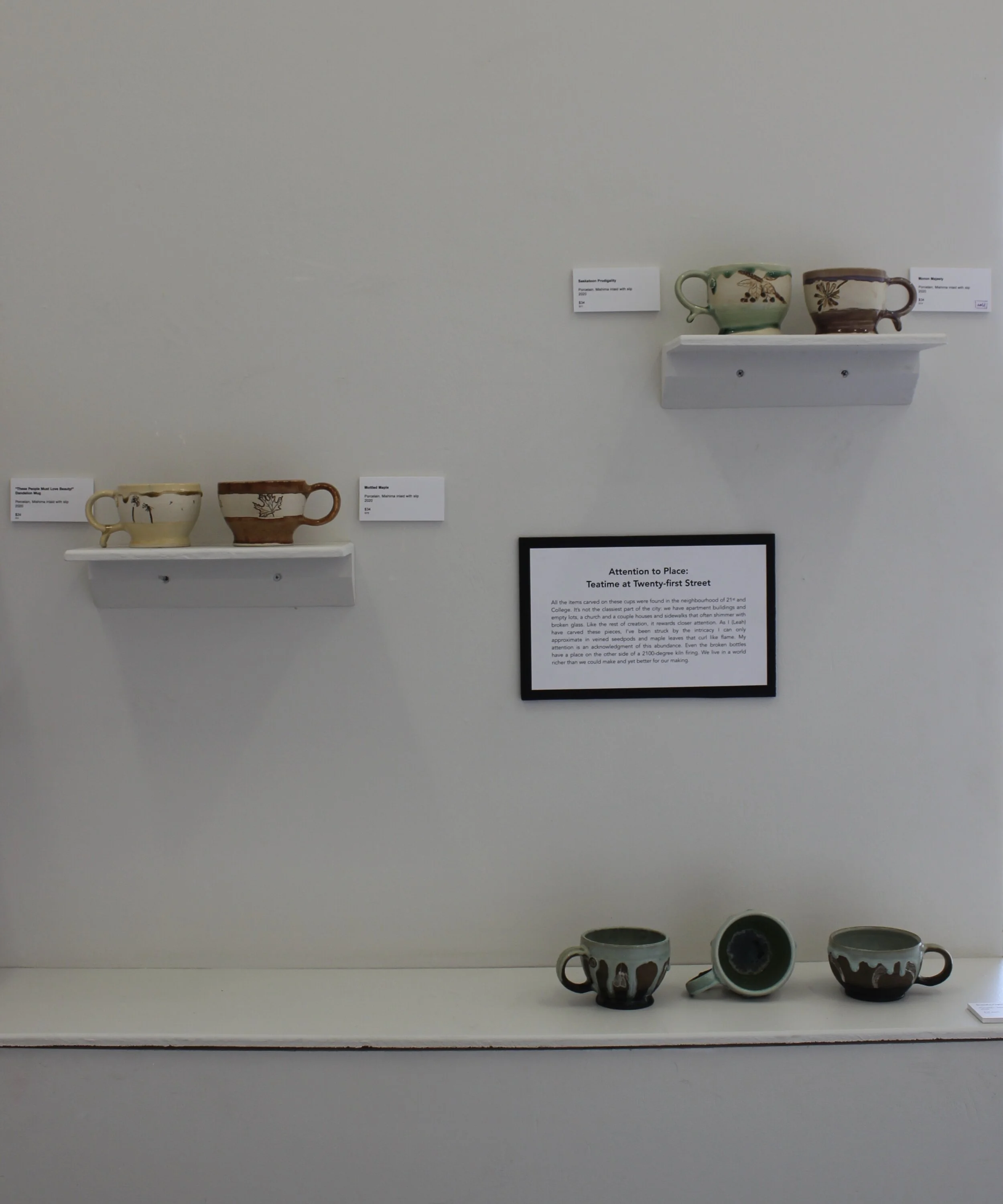
Attention to Place: Teatime at Twenty-first Street
All the items carved on these cups were found in the neighbourhood of 21st and College. It’s not the classiest part of the city: we have apartment buildings and empty lots, a church and a couple houses and sidewalks that often shimmer with broken glass. Like the rest of creation, it rewards closer attention. As I (Leah) have carved these pieces, I’ve been struck by the intricacy I can only approximate in veined seedpods and maple leaves that curl like flame. My attention is an acknowledgment of this abundance. Even the broken bottles have a place on the other side of a 2100-degree kiln firing. We live in a world richer than we could make and yet better for our making.